

Applications
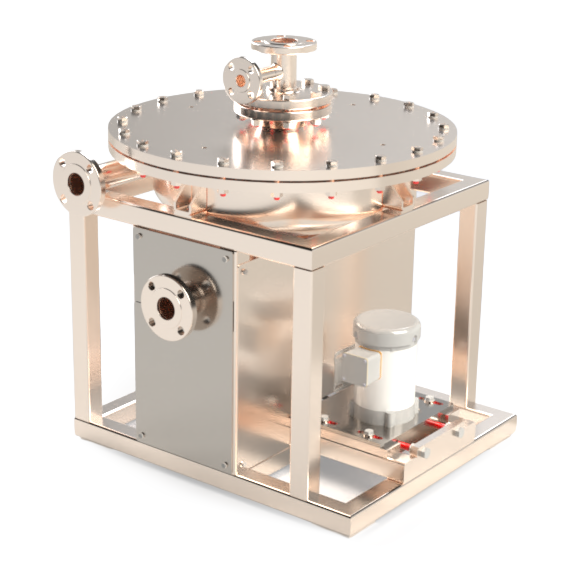
Rotating packed beds deliver a strong suite of benefits across a wide range of separation and purification tasks because they intensify mass transfer in a compact, responsive device.

Beverage & Industrial
Deaeration
Rotating packed beds bring a real performance boost to water deaeration because they create an exceptionally efficient environment for stripping dissolved gases. In beverage applications, where oxygen levels directly affect flavor stability, shelf life, and product consistency, an RPB’s high centrifugal forces spread water into ultra-thin films, dramatically increasing the surface area available for mass transfer. This allows oxygen to be removed quickly and reliably without relying on tall deaeration towers or large vacuum systems. The compact footprint is a major advantage for breweries, soft-drink plants, and other beverage facilities where floor space is at a premium and production lines are tightly integrated.
Industrial deaeration benefits in much the same way. Many processes, from boiler feedwater preparation to corrosion-sensitive manufacturing, require extremely low dissolved-oxygen levels to protect equipment and maintain product quality. RPBs achieve these targets with shorter residence times, rapid startup, and stable performance across a wide range of flow rates. Their intensified mass-transfer environment means operators can downsize supporting infrastructure, reduce energy consumption, and integrate deaeration into modular or retrofit systems more easily. The result is a highly efficient, flexible, and space-saving alternative to traditional deaeration technologies.
Carbon Capture
CO₂ Capture
Rotating packed beds bring a powerful dose of process intensification to CO₂ capture by dramatically increasing gas–liquid contact efficiency, allowing high absorption rates in a compact device. Their small footprint and rapid startup make them ideal for modular or distributed carbon-capture systems, where space and responsiveness matter just as much as separation performance.
Reactions & Synthesis
Chemical Processing
In chemical processing, many reactions depend on efficient gas–liquid or liquid–liquid contact. RPBs provide uniform liquid distribution, high shear, and rapid mixing, which can accelerate reaction rates and improve selectivity. This makes them especially useful for reactive absorption, oxidation, and fine-chemical synthesis. Their wide turndown capability also supports multipurpose plants that must operate efficiently across varying production scales.

Hydrogen Purification
Solvent-absorption and reactive separation steps gain from the RPB’s high interfacial area, improving impurity removal while reducing equipment size — ideal for modular hydrogen systems and pilot plants.

Liquid–Liquid Separation
High centrifugal forces create fine dispersions and rapid phase disengagement, enabling efficient extraction even at low interfacial tension — with smaller equipment and high throughput.

Wastewater Treatment
RPBs intensify stripping of volatile contaminants, oxygen transfer, and chemical treatment, adding capacity without expanding plant footprint — useful for decentralized or mobile units.
A Compelling Alternative to Gravity-Driven Equipment
Across all these categories, the unifying advantage of an RPB is its ability to deliver high-efficiency mass transfer in a compact, flexible, and fast-responding platform, thus making it a compelling alternative to traditional gravity-driven separation equipment. If you have a process that relies on outdated, slow, or unresponsive columns, we’re confident that GasTran can deliver a reliable RPB alternative which will produce immediate results.